
From Stars to Atoms. The Neuchâtel Observatory
https://www.etoiles-aux-atomes.ch/
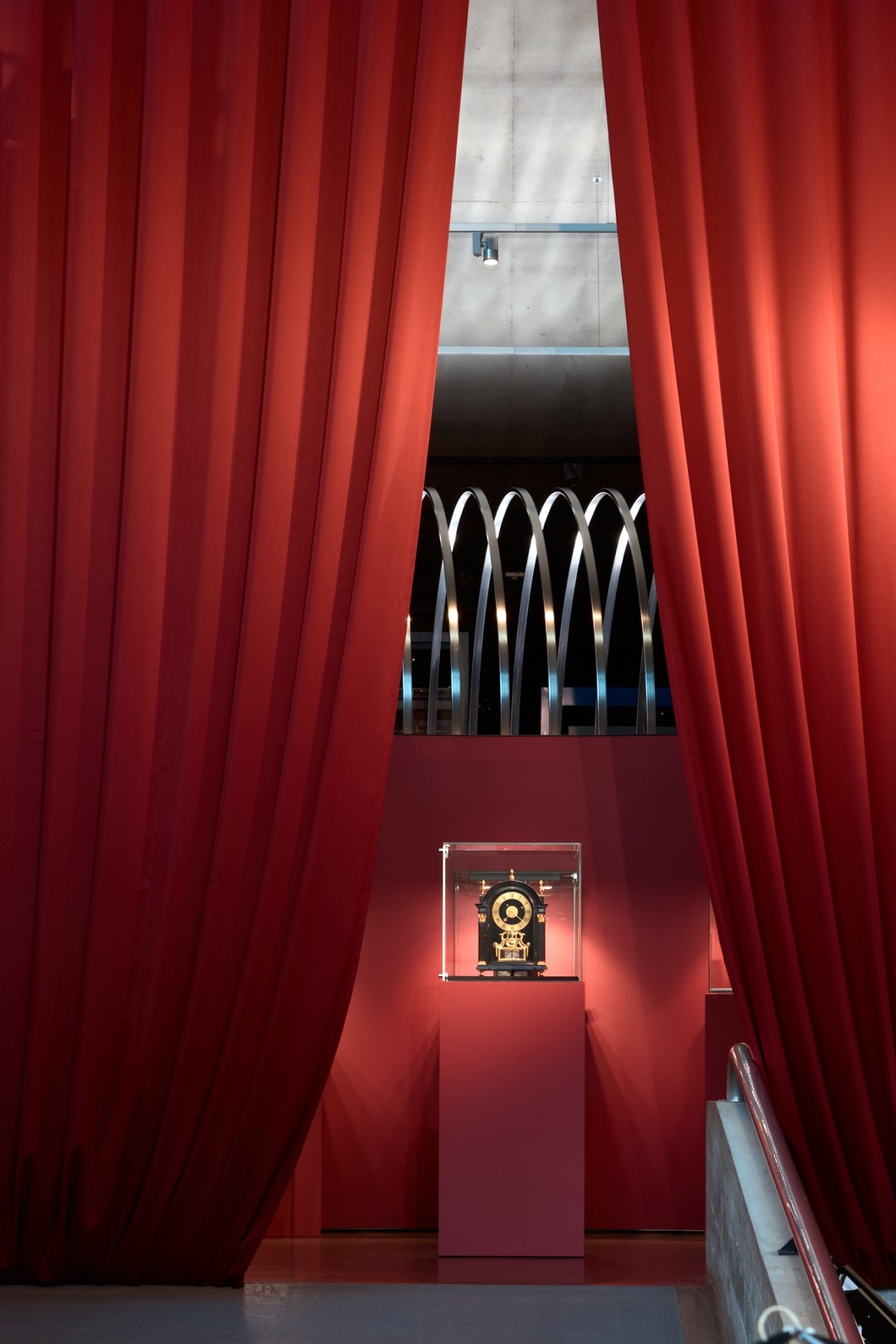
The "Determining the hour" exhibition aims — through examples and a selection of original objects used by the staff of the Neuchâtel Observatory - to explain how the hour was defined throughout the history of timekeeping, what performance levels were reached in chronometry, the physical and human limits of these determinations, and the economic and social impacts of this pursuit of precision.
The closure of the Neuchâtel Observatory in 2007 and the continuation of some of its activities within other bodies dedicated to basic and applied research or to technology transfer for industrial purposes raised significant questions regarding the preservation of the tangible and intangible heritage the Observatory was leaving behind. This heritage deserved to be addressed in a systematic, cross-disciplinary and in-depth way. That is the aim of the « Determining the hour » chapter of the Froms Stars to Atoms exhibition, presented at the MIH in La Chaux-de-Fonds.
The exhibition draws on the most recent research carried out at the University of Neuchâtel and the Haute-École Arc Conservation-Restauration around the MIH’s collections related to the Observatory.
A large part of the historic scientific instruments were deposited at the MIH by the Observatory. By doing so, it ensured the preservation of this cantonal heritage — as unique as it is precious — in connection with the broader history of timekeeping. Armed with this collection, it fell quite naturally to the MIH to address the question of determining the hour through meridian circles, chronographs, and mechanical, quartz and atomic precision clocks.
Displaying the Observatory’s scientific instruments requires an effort of contextualisation, interpretation and popularisation, in order to convey — beyond their function — the uses and applications of such objects. A photographic zenith tube or an experimental continuous-jet caesium atomic clock cannot simply be exhibited as curiosities. Here, the level of abstraction required of visitors is maximal — all the more so given the scales at which these instruments operate: the infinitely large, that of stars, or the infinitely small, that of atoms. That is what the « Determining the hour » exhibition at the MIH offers. Behind the speaking-clock phone number or the time display on a mobile phone screen, the fabric of time is produced within observatories and metrological institutions. This material history of determining the hour, as shown at the MIH, is not devoid of a human factor — in fact, the human factor lies at its very centre.